
Citrus Pests Key
5 હજાર+
ડાઉનલોડ

પ્રત્યેક
info

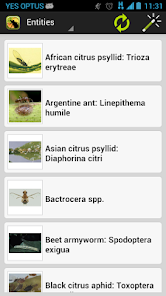
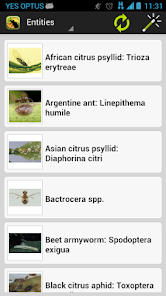
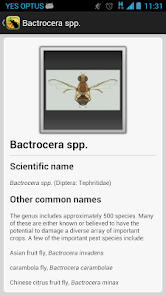
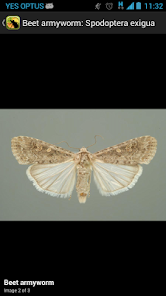
આ ઍપનું વર્ણન
Citrus is one of the most important commercially grown agricultural products in the United States. Additionally, many citrus varieties are backyard crop plants, providing important sources of food at a local community level. As a result, citrus is one of the most economically important groups of plants. Numerous insect pests threaten the citrus industry and backyard citrus trees through feeding damage, while other pests vector diseases that are potentially lethal.
Citrus Pests Key is aimed primarily at extension agents, inspectors, and other plant professionals with access to a light microscope and hand lens. It is designed to help users determine which type of citrus insect pest they have encountered by featuring an interactive key coupled with illustrated, descriptive fact sheets for each pest. Citrus Pests Key is intended to be used as a screening aid. For definitive species identification, specimens should be sent to an expert for verification.
During the initial development of the key, an advisory committee developed a comprehensive list of over 300 pest and beneficial arthropods that needed to be considered for inclusion into the key. Since the key was designed and scoped as a basic screening aid to support survey and detection support, 51 total species from the comprehensive list were selected by the authors based on the following criteria:
- commonly found insect pests on cultivated citrus in the U.S. as determined by the Citrus Pest Advisory Committee,
- citrus insect pests that have been intercepted at U.S. ports but have not become established,
- insect pests that have entered the U.S. but have now been eradicated, and
- exotic insect pests of immediate concern to U.S. cultivated citrus.
Key authors: Sarahlynne Guerrero, Jennifer Weeks, Amanda Hodges, Kirk Martin, and Norman Leppla
This key is part of a complete Citrus Pests tool: http://idtools.org/id/citrus/pests/
Lucid Mobile key developed by USDA APHIS ITP
Citrus Pests Key is aimed primarily at extension agents, inspectors, and other plant professionals with access to a light microscope and hand lens. It is designed to help users determine which type of citrus insect pest they have encountered by featuring an interactive key coupled with illustrated, descriptive fact sheets for each pest. Citrus Pests Key is intended to be used as a screening aid. For definitive species identification, specimens should be sent to an expert for verification.
During the initial development of the key, an advisory committee developed a comprehensive list of over 300 pest and beneficial arthropods that needed to be considered for inclusion into the key. Since the key was designed and scoped as a basic screening aid to support survey and detection support, 51 total species from the comprehensive list were selected by the authors based on the following criteria:
- commonly found insect pests on cultivated citrus in the U.S. as determined by the Citrus Pest Advisory Committee,
- citrus insect pests that have been intercepted at U.S. ports but have not become established,
- insect pests that have entered the U.S. but have now been eradicated, and
- exotic insect pests of immediate concern to U.S. cultivated citrus.
Key authors: Sarahlynne Guerrero, Jennifer Weeks, Amanda Hodges, Kirk Martin, and Norman Leppla
This key is part of a complete Citrus Pests tool: http://idtools.org/id/citrus/pests/
Lucid Mobile key developed by USDA APHIS ITP
આ રોજ અપડેટ કર્યું
ડેવલપર તમારો ડેટા કેવી રીતે એકત્રિત અને શેર કરે છે, તે સમજવાથી સુરક્ષાની શરૂઆત થાય છે. તમારા દ્વારા ઍપનો ઉપયોગ, ઉપયોગ થાય તે પ્રદેશ અને તમારી ઉંમરના આધારે ડેટાની પ્રાઇવસી અને સુરક્ષા પદ્ધતિઓ અલગ-અલગ હોઈ શકે છે. ડેવલપર દ્વારા આ માહિતી પ્રદાન કરવામાં આવી છે અને તેઓ સમયાંતરે તેને અપડેટ કરી શકે છે.


નવું શું છે
Updated app to the latest LucidMobile
ઍપ સપોર્ટ
ડેવલપર વિશે
IDENTIC PTY LTD
support@lucidcentral.org
47 LANDSCAPE ST
STAFFORD HEIGHTS QLD 4053
Australia
+61 434 996 274


