Fibonaci Projection Calculator
Contient des annoncesAchats via l'appli
5K+
Téléchargements

Tout public
info
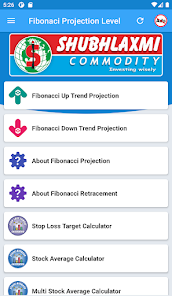
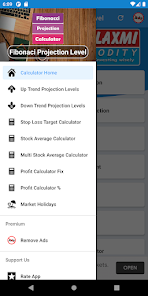
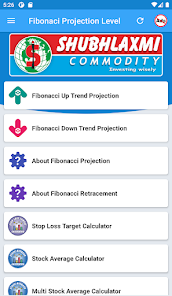
À propos de l'application
About Fibonacci Price Projections
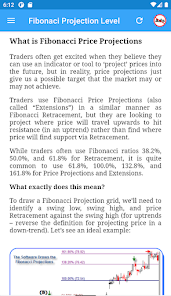
Traders often get excited when they believe they can use an indicator or tool to ‘project’ prices into the future, but in reality, price projections just give us a possible target that the market may or may not achieve.
Traders use Fibonacci Price Projections (also called “Extensions”) in a similar manner as Fibonacci Retracements, but they are looking to project where price will travel upwards to hit resistance (in an uptrend) rather than find where price will find support via retracements.
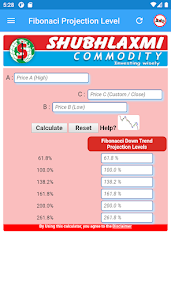
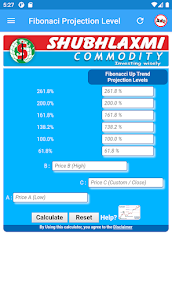
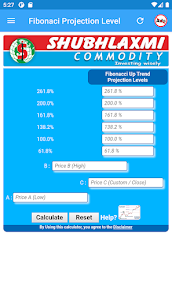
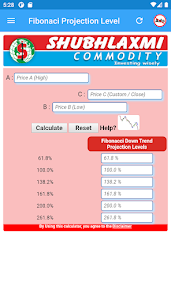
While traders often use Fibonacci ratios 38.2%, 50.0%, and 61.8% for retracements, it is quite common to use 61.8%, 100.0%, 132.8%, and 161.8% for Price Projections and Extensions.
What exactly does this mean?
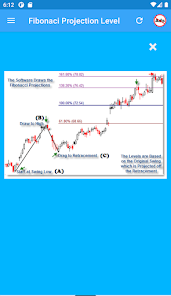
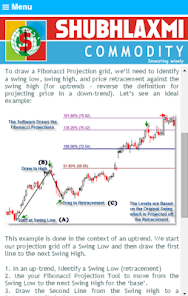
To draw a Fibonacci Projection grid, we’ll need to identify a swing low, swing high, and price retracement against the swing high (for uptrends – reverse the definition for projecting price in a down-trend).
This example is done in the context of an uptrend. We start our projection grid off a Swing Low and then draw the first line to the next Swing High.
1. In an up-trend, Identify a Swing Low (retracement)
2. Use your Fibonacci Projection Tool to move from the Swing Low to the next Swing High for the ‘base’.
3. Draw the Second Line from the Swing High to a Retracement (Swing) Low
The first line (from Swing Low to Swing High) serves as the “Measurement Swing” by which we will soon create Fibonacci Projections. The “Retracement” Swing provides the base from which to project Fibonacci relationships of the first swing.
For example, if the original swing is 100 and our retracement is 70 down, we would take the Fibonacci ratios of the 100 swing (61.8%, 100%, etc) and then add those values to the Retracement Low. Luckily, most software programs do all this for us with three clicks – you just need to know where to point your mouse to click.
Now, unlike the Fibonacci Retracement tool where we are looking to find support, we are now looking to find points above price where the market is likely to experience Overhead Resistance. These will now serve as Profit Targets to help us establish risk/reward relationships.
Traders often get excited when they believe they can use an indicator or tool to ‘project’ prices into the future, but in reality, price projections just give us a possible target that the market may or may not achieve.
Traders use Fibonacci Price Projections (also called “Extensions”) in a similar manner as Fibonacci Retracements, but they are looking to project where price will travel upwards to hit resistance (in an uptrend) rather than find where price will find support via retracements.
While traders often use Fibonacci ratios 38.2%, 50.0%, and 61.8% for retracements, it is quite common to use 61.8%, 100.0%, 132.8%, and 161.8% for Price Projections and Extensions.
What exactly does this mean?
To draw a Fibonacci Projection grid, we’ll need to identify a swing low, swing high, and price retracement against the swing high (for uptrends – reverse the definition for projecting price in a down-trend).
This example is done in the context of an uptrend. We start our projection grid off a Swing Low and then draw the first line to the next Swing High.
1. In an up-trend, Identify a Swing Low (retracement)
2. Use your Fibonacci Projection Tool to move from the Swing Low to the next Swing High for the ‘base’.
3. Draw the Second Line from the Swing High to a Retracement (Swing) Low
The first line (from Swing Low to Swing High) serves as the “Measurement Swing” by which we will soon create Fibonacci Projections. The “Retracement” Swing provides the base from which to project Fibonacci relationships of the first swing.
For example, if the original swing is 100 and our retracement is 70 down, we would take the Fibonacci ratios of the 100 swing (61.8%, 100%, etc) and then add those values to the Retracement Low. Luckily, most software programs do all this for us with three clicks – you just need to know where to point your mouse to click.
Now, unlike the Fibonacci Retracement tool where we are looking to find support, we are now looking to find points above price where the market is likely to experience Overhead Resistance. These will now serve as Profit Targets to help us establish risk/reward relationships.
Date de mise à jour
La sécurité, c'est d'abord comprendre comment les développeurs collectent et partagent vos données. Les pratiques concernant leur confidentialité et leur protection peuvent varier selon votre utilisation, votre région et votre âge. Le développeur a fourni ces informations et peut les modifier ultérieurement.

Aucune donnée partagée avec des tiers
En savoir plus sur la manière dont les développeurs déclarent le partage

Aucune donnée collectée
En savoir plus sur la manière dont les développeurs déclarent la collecte

Les données sont chiffrées lors de leur transfert

Impossible de supprimer les données
Assistance de l'appli
À propos du développeur
Harish S Bhanushali
contact.shubhlaxmi@gmail.com
1, Ramchandra Smruti CHS, Gupte Road, Jaihind Colony
Dombivali west
Dombivli, Maharashtra 421202
India


