
カラクリBOOKS
100+
Downloads

Everyone 10+
info


About this app
A picture book that lets you play with local folk tales!
We have reconstructed local folk tales and folklore, which are disappearing due to changes in the times and the merger of local governments, into a more familiar form.
Karakuri BOOKS is a digital picture story of stories from Aichi Prefecture so that you can be proud of the area where you were born and raised.
[Recorded works]
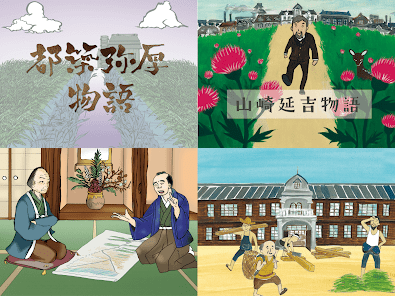
“Tsuzuki Yaatsu Monogatari”
This is a story from the Edo period, about 250 years ago.
There was a village called Izumi in the south of Anjo City, Aichi Prefecture. There was a large mansion called Tsuzuki where sake was made, and the sake was so famous that it was even drunk in Edo. Yaatsu Tsuzuki was born in 1765 as the son of this sake brewer. This region was called the Aoumi, and it was a dry land that had to rely on water from reservoirs for farming. Yasatsu thought of putting water through there, and he gave up all his personal belongings and worked hard. However, Yasu passed away without his dream coming true, but the world he envisioned later led to the development of Anjo, which was hailed as ``Japanese Denmark.''
The art clubs of three high schools in Anjo City were in charge of the illustrations.
Music production, narration, and programming were all done by volunteers. We would like to express our deepest gratitude to everyone who cooperated with the production.
We hope you will learn more about Anjo City through Karakuri BOOKS.
“Niimi Nankichi Story”
This is a story by Nankichi Niimi, a fairy tale author famous for Gon Fox.
The popular author, whose work is even featured in elementary school Japanese textbooks, spent his time as a teacher in Anjo City. Nankichi Niimi's experiences of losing his mother at a young age, being adopted, and being unable to go to higher education due to his innate physical weakness influenced Nankichi Niimi's literature.
Nankichi was finally devoting himself to literature in his dream city of Tokyo, when he suddenly fell ill and had to return home. After many hardships, he became a regular teacher in Anjo, and Nankichi's literature suddenly blossomed. During his time as a boarding house in the lively Anjo area, he wrote many works.
Their footprints can still be seen in Anjo City.
We hope you will learn more about Anjo City through Karakuri BOOKS.
“Yamazaki Nobuyoshi Story”
Enkichi Yamazaki was born on June 26, 1873 and was an agricultural politician from Ishikawa Prefecture. He became the first principal of Aichi Prefectural Agriculture and Forestry School and served as secretary of the Imperial Agricultural Association. As principal, he built the Aichi Prefectural Agriculture and Forestry School into one of Japan's leading agricultural and forestry schools, and became the center of education, administration, and research for agricultural policy in Aichi Prefecture. Nobuyoshi Yamazaki is said to have contributed greatly to the efforts to improve agriculture in Aichi Prefecture, and the fact that the Anjo City area has become such an advanced agricultural area that it is often referred to as ``Japanese Denmark.''
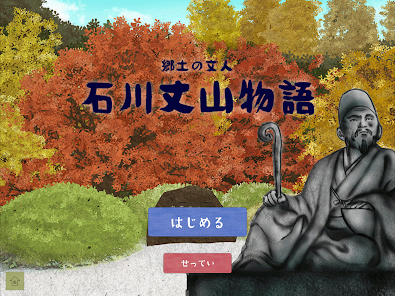
“Ishikawa Jozan Story”
Jozan Ishikawa was born in what is now Izumi-cho, Anjo City, into the Anjo Fuyo family that had served the Tokugawa clan for generations. It is said that Tokugawa Ieyasu recognized the talented Jozan and always kept him by his side. However, after being reprimanded for disobeying orders during the Summer Campaign in Osaka, he quit being a samurai and devoted himself to studying in Kyoto. The Shisen-do Hall at Ichijo-ji Temple in Kyoto was built by Jozan. Jozan was a Confucian, a Chinese poet, a calligrapher, a tea master, and a landscape architect. This work follows his life and tells the story of his overflowing thoughts in creation.
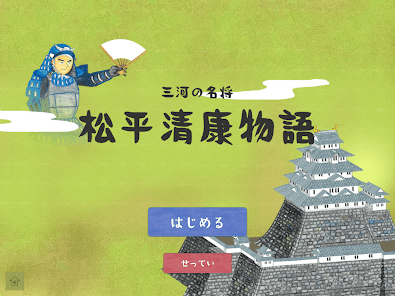
“The Story of Kiyoyasu Matsudaira”
Tokugawa Ieyasu's grandfather, Kiyoyasu Matsudaira, was born in 1511 at Mikawa Anjo Castle in Anjo City, Aichi Prefecture, and became the seventh head of the family at the age of 13. Kiyoyasu, who was a talented military commander, quickly unified Mikawa using Okazaki Castle as his base. According to records, he was the head of the family who excelled at controlling people's hearts. Next, Kiyoyasu went to Moriyama Castle, the residence of Nobunaga's father, Nobuhide Oda, to conquer Owari. At that time, a false report was spread that Kiyoyasu had killed his vassal Sadakichi, who was rumored to be a spy, and Sadakichi's son Yashichiro, who had taken it seriously, misunderstood that Sadakichi had been killed and brutally murdered Kiyoyasu. I did. This work depicts Kiyoyasu's life from his birth to this ``Moriyama collapse''. We would be happy if you could learn about Kiyoyasu Matsudaira, a famous general born in Anjo.
“Okada Kikujiro Story”
Kikujiro Okada was born as the son of a poor farmer in Anjotosaki, and grew up watching his father work hard and learning, ``If you put your mind to it, you can do anything.'' He grew up believing in the value of working with wisdom and courage. Since being elected to the village council at the age of 26, he has lived in the world of politics. When he wanted to bring an agricultural school to Anjo, he desperately asked the villagers to think about the future of their children and grandchildren, and made it happen. Kikujiro passed away in 1963 at the age of 95. ``The Story of Kikujiro Okada'' Through this work, we hope that you will learn about Kikujiro Okada, whose ``spirit of town development'' was instrumental in the development of Anjo.
“Suzuki Masakichi Story”
Masakichi Suzuki, the father of the first domestically produced violin, was born in Nagoya in 1986. He built a violin manufacturing factory in Obu City and worked hard to develop Western music in Japan and foster local industry. This story was created to help children develop a sense of respect for their hometown through the life of Masakichi, who taught himself how to make a violin, which was rare at the time, through hard work and perseverance in a poor living environment. I would appreciate it if you could have an interest in and attachment to Suzuki Masakichi and his era.
We have reconstructed local folk tales and folklore, which are disappearing due to changes in the times and the merger of local governments, into a more familiar form.
Karakuri BOOKS is a digital picture story of stories from Aichi Prefecture so that you can be proud of the area where you were born and raised.
[Recorded works]
“Tsuzuki Yaatsu Monogatari”
This is a story from the Edo period, about 250 years ago.
There was a village called Izumi in the south of Anjo City, Aichi Prefecture. There was a large mansion called Tsuzuki where sake was made, and the sake was so famous that it was even drunk in Edo. Yaatsu Tsuzuki was born in 1765 as the son of this sake brewer. This region was called the Aoumi, and it was a dry land that had to rely on water from reservoirs for farming. Yasatsu thought of putting water through there, and he gave up all his personal belongings and worked hard. However, Yasu passed away without his dream coming true, but the world he envisioned later led to the development of Anjo, which was hailed as ``Japanese Denmark.''
The art clubs of three high schools in Anjo City were in charge of the illustrations.
Music production, narration, and programming were all done by volunteers. We would like to express our deepest gratitude to everyone who cooperated with the production.
We hope you will learn more about Anjo City through Karakuri BOOKS.
“Niimi Nankichi Story”
This is a story by Nankichi Niimi, a fairy tale author famous for Gon Fox.
The popular author, whose work is even featured in elementary school Japanese textbooks, spent his time as a teacher in Anjo City. Nankichi Niimi's experiences of losing his mother at a young age, being adopted, and being unable to go to higher education due to his innate physical weakness influenced Nankichi Niimi's literature.
Nankichi was finally devoting himself to literature in his dream city of Tokyo, when he suddenly fell ill and had to return home. After many hardships, he became a regular teacher in Anjo, and Nankichi's literature suddenly blossomed. During his time as a boarding house in the lively Anjo area, he wrote many works.
Their footprints can still be seen in Anjo City.
We hope you will learn more about Anjo City through Karakuri BOOKS.
“Yamazaki Nobuyoshi Story”
Enkichi Yamazaki was born on June 26, 1873 and was an agricultural politician from Ishikawa Prefecture. He became the first principal of Aichi Prefectural Agriculture and Forestry School and served as secretary of the Imperial Agricultural Association. As principal, he built the Aichi Prefectural Agriculture and Forestry School into one of Japan's leading agricultural and forestry schools, and became the center of education, administration, and research for agricultural policy in Aichi Prefecture. Nobuyoshi Yamazaki is said to have contributed greatly to the efforts to improve agriculture in Aichi Prefecture, and the fact that the Anjo City area has become such an advanced agricultural area that it is often referred to as ``Japanese Denmark.''
“Ishikawa Jozan Story”
Jozan Ishikawa was born in what is now Izumi-cho, Anjo City, into the Anjo Fuyo family that had served the Tokugawa clan for generations. It is said that Tokugawa Ieyasu recognized the talented Jozan and always kept him by his side. However, after being reprimanded for disobeying orders during the Summer Campaign in Osaka, he quit being a samurai and devoted himself to studying in Kyoto. The Shisen-do Hall at Ichijo-ji Temple in Kyoto was built by Jozan. Jozan was a Confucian, a Chinese poet, a calligrapher, a tea master, and a landscape architect. This work follows his life and tells the story of his overflowing thoughts in creation.
“The Story of Kiyoyasu Matsudaira”
Tokugawa Ieyasu's grandfather, Kiyoyasu Matsudaira, was born in 1511 at Mikawa Anjo Castle in Anjo City, Aichi Prefecture, and became the seventh head of the family at the age of 13. Kiyoyasu, who was a talented military commander, quickly unified Mikawa using Okazaki Castle as his base. According to records, he was the head of the family who excelled at controlling people's hearts. Next, Kiyoyasu went to Moriyama Castle, the residence of Nobunaga's father, Nobuhide Oda, to conquer Owari. At that time, a false report was spread that Kiyoyasu had killed his vassal Sadakichi, who was rumored to be a spy, and Sadakichi's son Yashichiro, who had taken it seriously, misunderstood that Sadakichi had been killed and brutally murdered Kiyoyasu. I did. This work depicts Kiyoyasu's life from his birth to this ``Moriyama collapse''. We would be happy if you could learn about Kiyoyasu Matsudaira, a famous general born in Anjo.
“Okada Kikujiro Story”
Kikujiro Okada was born as the son of a poor farmer in Anjotosaki, and grew up watching his father work hard and learning, ``If you put your mind to it, you can do anything.'' He grew up believing in the value of working with wisdom and courage. Since being elected to the village council at the age of 26, he has lived in the world of politics. When he wanted to bring an agricultural school to Anjo, he desperately asked the villagers to think about the future of their children and grandchildren, and made it happen. Kikujiro passed away in 1963 at the age of 95. ``The Story of Kikujiro Okada'' Through this work, we hope that you will learn about Kikujiro Okada, whose ``spirit of town development'' was instrumental in the development of Anjo.
“Suzuki Masakichi Story”
Masakichi Suzuki, the father of the first domestically produced violin, was born in Nagoya in 1986. He built a violin manufacturing factory in Obu City and worked hard to develop Western music in Japan and foster local industry. This story was created to help children develop a sense of respect for their hometown through the life of Masakichi, who taught himself how to make a violin, which was rare at the time, through hard work and perseverance in a poor living environment. I would appreciate it if you could have an interest in and attachment to Suzuki Masakichi and his era.
Updated on
Safety starts with understanding how developers collect and share your data. Data privacy and security practices may vary based on your use, region, and age. The developer provided this information and may update it over time.

No data shared with third parties
Learn more about how developers declare sharing

No data collected
Learn more about how developers declare collection
What’s new
v2025.11
・軽微な修正を行いました。
v2025.4
・軽微な修正を行いました。
v2025.3
・軽微な修正を行いました。
v2024.9
・『名君吉良さん』を削除しました。
・『一色の大ぢょうちん』を削除しました。
・『はずの証文岩』を削除しました。
・『天狗の羽うちわ』を削除しました。
・『にしがま線物語』を削除しました。
v2024.3.1
・軽微な修正を行いました。
v2024.3
・軽微な修正を行いました。
v2023.9.1
・『にしがま線物語』を追加しました。
v2022.1
・『松平清康物語』を追加しました。
・『岡田菊次郎物語』を追加しました。
v2021.12
・『天狗の羽うちわ』を追加しました。
v2021.10
・『はずの証文岩』を追加しました。
v2021.8
・『一色の大ぢょうちん』を追加しました。
v2021.6
・『名君吉良さん』を追加しました。
v2021.1
・『山崎延吉物語』を追加しました。
・『石川丈山物語』を追加しました。
v2020.8
・『鈴木政吉物語』を追加しました。
v2020.3
・新規リリース
・軽微な修正を行いました。
v2025.4
・軽微な修正を行いました。
v2025.3
・軽微な修正を行いました。
v2024.9
・『名君吉良さん』を削除しました。
・『一色の大ぢょうちん』を削除しました。
・『はずの証文岩』を削除しました。
・『天狗の羽うちわ』を削除しました。
・『にしがま線物語』を削除しました。
v2024.3.1
・軽微な修正を行いました。
v2024.3
・軽微な修正を行いました。
v2023.9.1
・『にしがま線物語』を追加しました。
v2022.1
・『松平清康物語』を追加しました。
・『岡田菊次郎物語』を追加しました。
v2021.12
・『天狗の羽うちわ』を追加しました。
v2021.10
・『はずの証文岩』を追加しました。
v2021.8
・『一色の大ぢょうちん』を追加しました。
v2021.6
・『名君吉良さん』を追加しました。
v2021.1
・『山崎延吉物語』を追加しました。
・『石川丈山物語』を追加しました。
v2020.8
・『鈴木政吉物語』を追加しました。
v2020.3
・新規リリース
App support
About the developer
筒井 潔
karakuribooks@gmail.com
Japan


